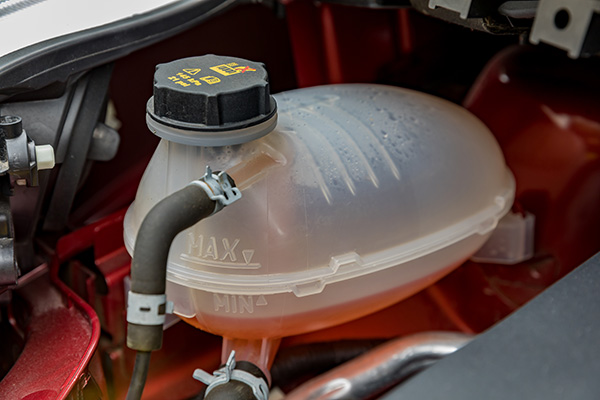
Seeing your temperature gauge rise when coolant levels look fine can be confusing. Most drivers assume overheating always means low coolant level, but that is not always true. A car can still run hot even when the reservoir is full, and everything appears normal at a glance.
When that happens, the issue usually involves how the cooling system is functioning, not just how much coolant it contains.
Thermostat Not Opening Properly
The thermostat controls when coolant flows through the engine and radiator. If it sticks closed or does not open fully, coolant cannot circulate the way it should.
Even with the correct amount of coolant, restricted flow causes heat to build up inside the engine. This often shows up as rising temperatures during normal driving, especially after the engine warms up.
Water Pump Not Circulating Coolant Efficiently
The water pump keeps coolant moving through the system. If it becomes worn or damaged, circulation slows down or becomes inconsistent.
At that point, coolant may still be present, but it is not moving fast enough to carry heat away. Overheating under these conditions is common, especially in traffic or at idle.
Radiator Blockage or Reduced Efficiency
The radiator needs open pathways to transfer heat effectively. Over time, debris, corrosion, or buildup inside the radiator can reduce its ability to cool the fluid.
Airflow through the radiator also matters. If the fins are blocked or damaged, heat cannot dissipate properly. This leads to higher temperatures even when coolant levels are correct.
Cooling Fan Not Working as It Should
Cooling fans play a major role when the vehicle is not moving. They pull air through the radiator to keep temperatures stable at idle or in traffic.
If the fan is not turning on, running at the wrong speed, or working intermittently, the engine may overheat at low speeds. You may notice the temperature drop once the car starts moving again.
Air Pockets in the Cooling System
Air trapped inside the cooling system can prevent coolant from circulating evenly. These air pockets disrupt flow and reduce the system’s ability to manage heat.
Even though the coolant level appears full, parts of the engine may not be receiving proper cooling. Bleeding the system during an inspection helps remove trapped air.
Faulty Temperature Sensor or Gauge Issues
In some cases, the engine may not actually be overheating. A faulty temperature sensor or dashboard gauge can give incorrect readings.
That said, it is important not to assume it is just a sensor. Verifying actual engine temperature during an inspection ensures the system is working safely.
Why Ignoring the Issue Can Lead to Damage
Even with coolant present, overheating still puts stress on engine components. Excess heat can lead to warped parts, damaged seals, or head gasket issues if left unresolved.
The longer the condition continues, the more likely it is to affect multiple systems. Addressing it early helps prevent more serious repairs.
How Regular Maintenance Helps Prevent Overheating
Cooling system checks during regular maintenance help catch issues before they affect performance. Inspecting the thermostat, radiator, fans, and pump helps ensure everything is working together.
An inspection also confirms that coolant is circulating properly, not just sitting in the system.
When to Schedule a Cooling System Inspection
If your temperature gauge rises unexpectedly or the engine runs hotter than usual despite proper coolant levels, it is time for an inspection.
Getting a clear answer early helps prevent further damage and keeps your vehicle running within a safe temperature range.
Get Cooling System Service In Plano, TX, With Davenport Motor Company
If your car is running hot even with the right coolant level, Davenport Motor Company in Plano, TX, can inspect your cooling system and find the cause before it leads to engine damage.
Call today to schedule your appointment and keep your vehicle operating at the temperature it was designed for.