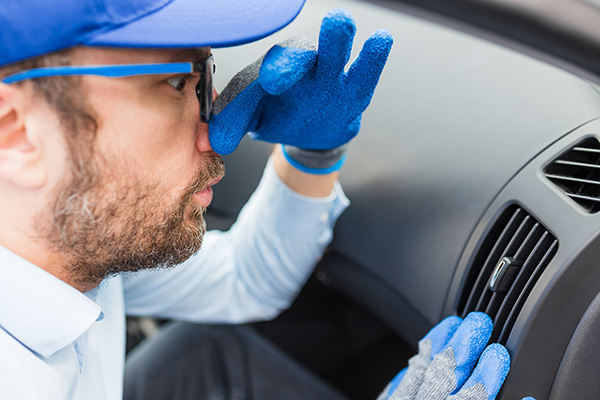
That sweet, almost syrupy smell in the driveway or at a stoplight is not just “old car smell.” It is one of the earliest warnings your cooling system gives you before things get expensive.
If you can smell antifreeze, coolant is already escaping somewhere, and the system will not magically seal itself back up.
What That Sweet Coolant Smell Really Means
Coolant, often called antifreeze, is a mix of water and chemicals that raises the boiling point, lowers the freezing point, and protects metal surfaces inside the engine. It is made with a distinct sweet odor, so leaks are easier to notice. When you catch that smell, some of that fluid has left the closed system and landed on a hot engine part, exhaust component, or is drifting into the cabin vents.
Sometimes the leak is tiny, just enough to create a faint scent on warm days. Other times it lands on very hot metal and turns into light vapor you can smell around the front of the car. Your nose often picks up that change long before the temperature gauge or warning lights give you any obvious sign.
Common Places Coolant Leaks Start
Coolant does not only live in the radiator. It moves through several hoses and components, and any of them can become a leak point over time. Typical trouble spots include:
- Radiator seams, plastic end tanks, and hose necks
- Upper and lower radiator hoses, heater hoses, and quick-connect fittings
- Water pump seals and housings
- Thermostat housings and intake manifold gaskets
- Heater cores and the small hoses feeding them inside the dash
We often find that a leak begins as a light, crusty stain around a clamp or fitting. By the time you see drops on the ground, it has usually been seeping for quite a while.
From Faint Smell to Serious Overheating
Coolant problems usually follow a pattern. Early on, you may notice a light sweet smell after parking, but no obvious spots on the driveway. Weeks later, you might see a small damp patch under the nose of the car or near the firewall, and the smell gets stronger when the engine is fully hot.
As the leak continues, the coolant level in the reservoir starts to fall between checks. You may spot dried, colored residue around a hose connection, radiator cap, or seam. If nothing is done, the temperature gauge can begin to creep higher in traffic or on hills. The last stage is full-blown overheating, steam from under the hood, and a real risk of engine damage. Acting early in that timeline is almost always cheaper and less stressful.
Why That Odor Is More Than Just an Overheat Risk
Most people link coolant directly to overheating, and that is a big part of the story, but modern engines also rely on very stable temperatures for proper operation. Running hotter than normal, even for short stretches, can stress head gaskets, plastic cooling parts, hoses, and temperature-sensitive sensors.
If the leak is inside the cabin from a heater core or related hoses, you are also breathing in coolant vapors and fighting constant window fogging. That is both a comfort and visibility problem. In our shop, we treat coolant odor as a real warning, not background noise, because we have seen how many major failures started with “just a little smell” that was ignored.
Ethylene Glycol: What It Is and Why It’s Dangerous
Most traditional coolants are built around ethylene glycol, a chemical that does a great job managing temperature and protecting metal, but it comes with serious safety concerns. Ethylene glycol has a naturally sweet taste, which is a big part of the problem. Pets and small children may be curious about bright colored puddles on the ground and are more likely to ingest them.
Even small amounts can be highly toxic if swallowed. Early symptoms in people and animals can look mild, but the damage to the kidneys and other organs can be severe. That is why any visible coolant spill should be cleaned up promptly, using rags or absorbent material, and disposed of properly rather than just hosing it into the street.
If you suspect a pet or child has ingested coolant, the right move is to contact a veterinarian or medical professional immediately, not to wait and see if they seem okay later. From our perspective, fixing the leak and keeping the cooling system sealed is not only about protecting the engine, but it is also about keeping your driveway and garage safe.
Owner Habits That Make Coolant Leaks Worse
A few understandable reactions can turn a manageable leak into a much larger problem:
- Topping off the reservoir again and again without ever looking for the actual source
- Continuing to drive long distances after an overheat because “it cooled back down”
- Opening a hot radiator cap, which can cause burns and does nothing to repair the leak
- Pouring in sealant products that may clog small passages along with the leak point
We usually advise staying away from “miracle” stop leak bottles. They might slow a drip for a short time, but they can also plug heater cores, radiator tubes, and small coolant passages. In the end, you may still repair the original leak and have to deal with sealer-related damage on top of it.
Smart Checks When You Notice a Coolant Smell
If you catch that sweet odor, there are a few safe checks you can do. Once the engine has cooled completely, look at the coolant reservoir level and compare it with the “full” and “low” marks on the side. A level that keeps dropping between checks, with no obvious external reason, is a clear clue.
You can also look under the vehicle after it has been parked for a while. Small colored drops or chalky trails under the front or mid-section are worth noting. Inside, check for damp carpet on the passenger side and windows that fog up frequently with a sweet smell. Instead of just adding more coolant and hoping for the best, this is the point where it makes sense to schedule an inspection so we can pressure test the system and pinpoint the leak.
Get Coolant Leak Repair in Plano, TX with Davenport Motor Company
If you have noticed a sweet antifreeze smell, a reservoir that slowly drops, or a temperature gauge that behaves differently than it used to, this is the right time to get in front of it. We can pressure test your cooling system, locate the leak, and repair it before it turns into overheating or engine damage.
Schedule coolant leak diagnosis and repair in Plano, TX with Davenport Motor Company, and we will help protect both your engine and your peace of mind.